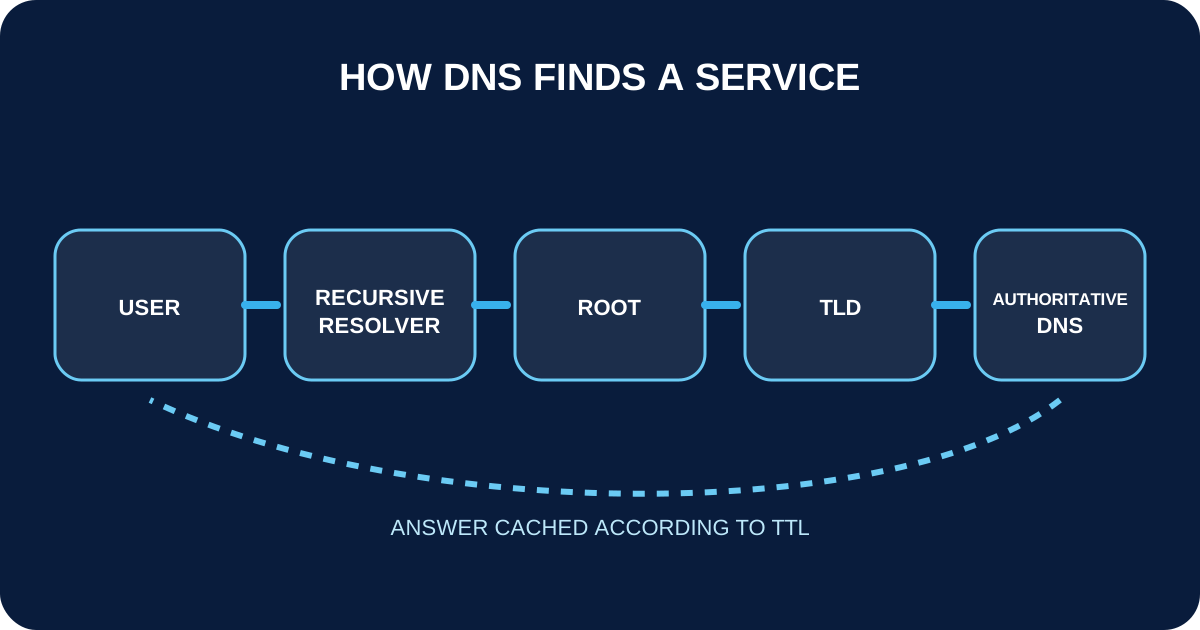
DNSSEC adds origin authentication and integrity protection to DNS data through digital signatures. A validating resolver can detect a response that does not match the signed zone data. It protects DNS answers, not the confidentiality of a visitor's traffic.
The problem DNSSEC addresses
Traditional DNS did not provide strong authentication of answers, allowing forged responses or cache poisoning to redirect users. DNSSEC lets resolvers validate that signed DNS data came from the expected zone and was not altered.
- It signs DNS data, not every query packet.
- Validation depends on a complete chain of trust.
- Invalid signatures can correctly cause resolution failure.
How the chain of trust works
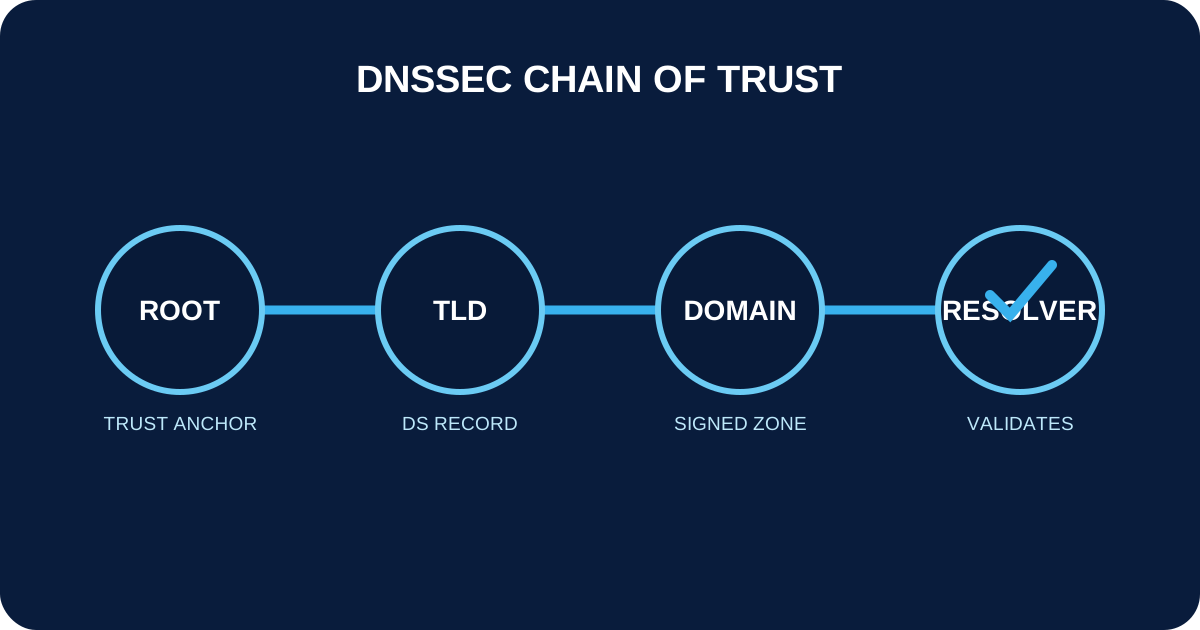
The zone publishes DNSKEY records and signatures. A DS record at the parent links trust to the child zone. A validating resolver follows this chain from a trusted anchor to verify the answer.
- DNS provider signs the zone.
- Registrar submits the correct DS data to the registry.
- Parent publishes the delegation link.
- Resolvers validate signatures before returning data.
Deploy without causing an outage
Enable signing at the DNS provider, confirm the published keys, then add DS data through the registrar using the provider's exact values. Monitor validation before changing providers; remove or replace DS records in the correct sequence during migration.
- Do not copy key values manually when an integration exists.
- Test with independent validators.
- Document key rollover and provider-migration procedures.
Official references
Frequently asked questions
Does DNSSEC encrypt DNS queries?
No. It authenticates signed DNS data and detects modification. Query privacy requires other mechanisms such as encrypted DNS transport.
Does DNSSEC replace HTTPS?
No. HTTPS authenticates and encrypts the web connection; DNSSEC validates DNS data. They address different layers.
Can DNSSEC break a domain?
Incorrect signatures or DS data can make validating resolvers reject answers. Use a tested provider workflow and monitor changes.