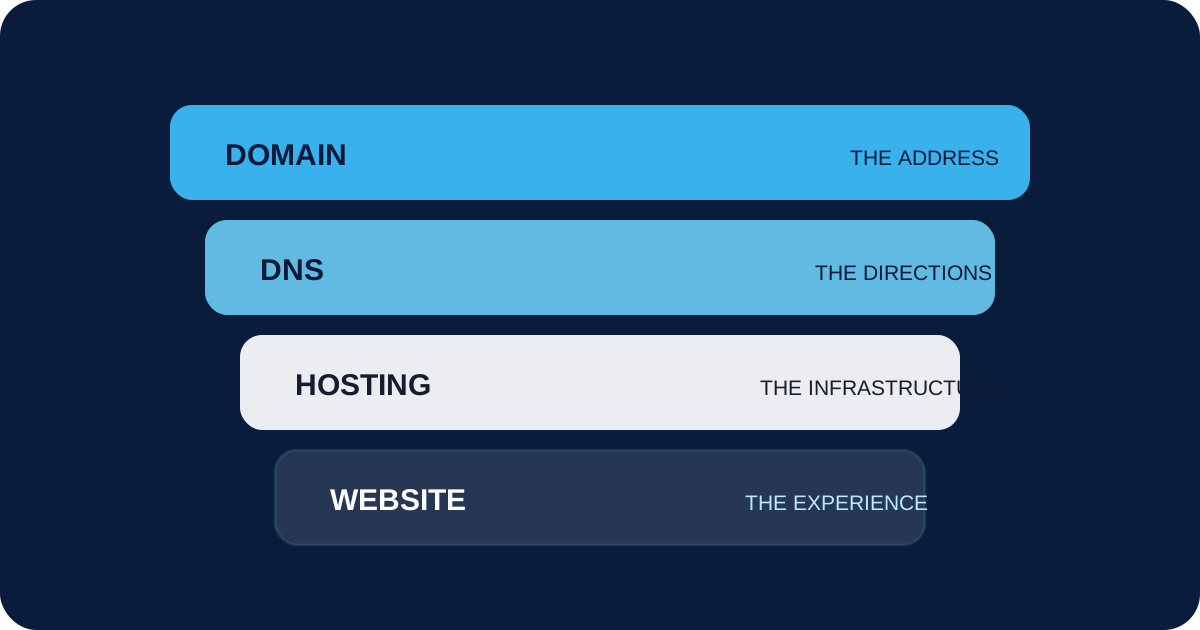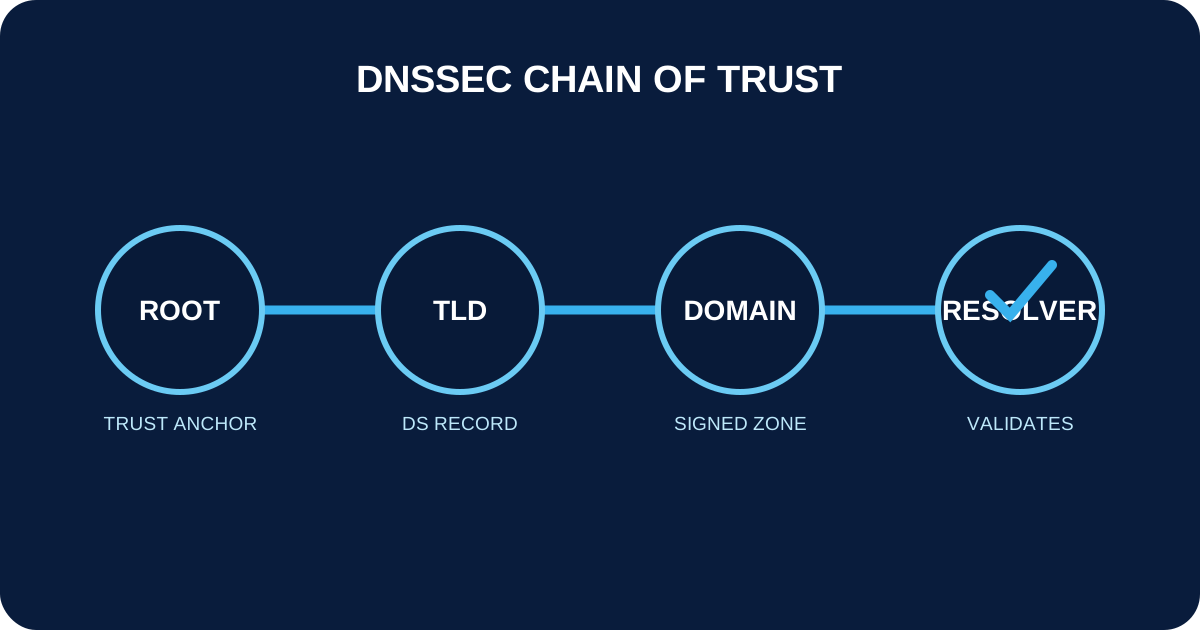
The Domain Name System translates human-friendly names into data computers use to locate services. It is distributed and hierarchical: no single server contains every answer, and caching makes repeated lookups faster while adding change-management considerations.
A lookup from browser to authoritative answer
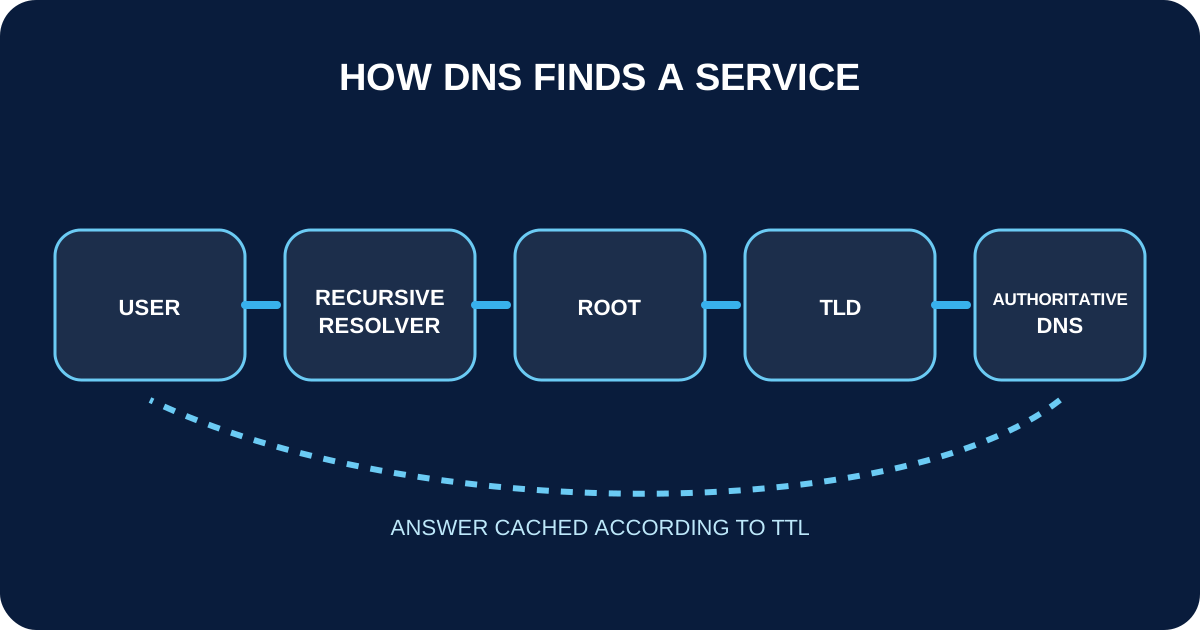
The device asks a recursive resolver. If the result is not cached, the resolver follows referrals from the DNS root to the top-level domain and then to authoritative nameservers for the domain. It returns the answer and caches it according to the record's TTL.
- Browser or application requests a name.
- Recursive resolver checks its cache.
- Root and TLD referrals identify authoritative servers.
- Authoritative DNS returns the record.
- The resolver caches and returns the answer.
DNS records you will encounter
A and AAAA map names to IPv4 and IPv6 addresses. CNAME aliases one name to another. MX directs email, TXT carries verification and email-policy data, and NS identifies authoritative nameservers.
| Record | Typical purpose | Operational caution |
|---|---|---|
| A / AAAA | Web or service address | Keep both protocols tested |
| CNAME | Alias hostname | Cannot be used everywhere |
| MX | Mail delivery | Priority and exact target matter |
| TXT | Verification and policy | Quote and length handling vary |
| NS | Authoritative delegation | Must match registrar delegation |
TTL, propagation and safe changes
TTL controls how long resolvers may cache an answer. There is no single global propagation switch: users see new data as caches expire and authoritative changes become available. Lower TTL before a planned change, but restore a sensible value afterward.
- Capture the old and new record sets.
- Change one layer at a time.
- Test authoritative answers before relying on public caches.
- Keep rollback values ready.
Official references
Frequently asked questions
What does DNS propagation mean?
It describes caches and systems adopting changed records over time. Authoritative publication and cached TTLs determine what different users see.
Does a lower TTL make DNS faster?
It can make changes visible sooner after cache expiry, but increases query frequency. It does not make the destination server respond faster.
Who controls my DNS?
The authoritative provider named by your delegation publishes the zone; the registrar or registry controls the delegation that points to it.