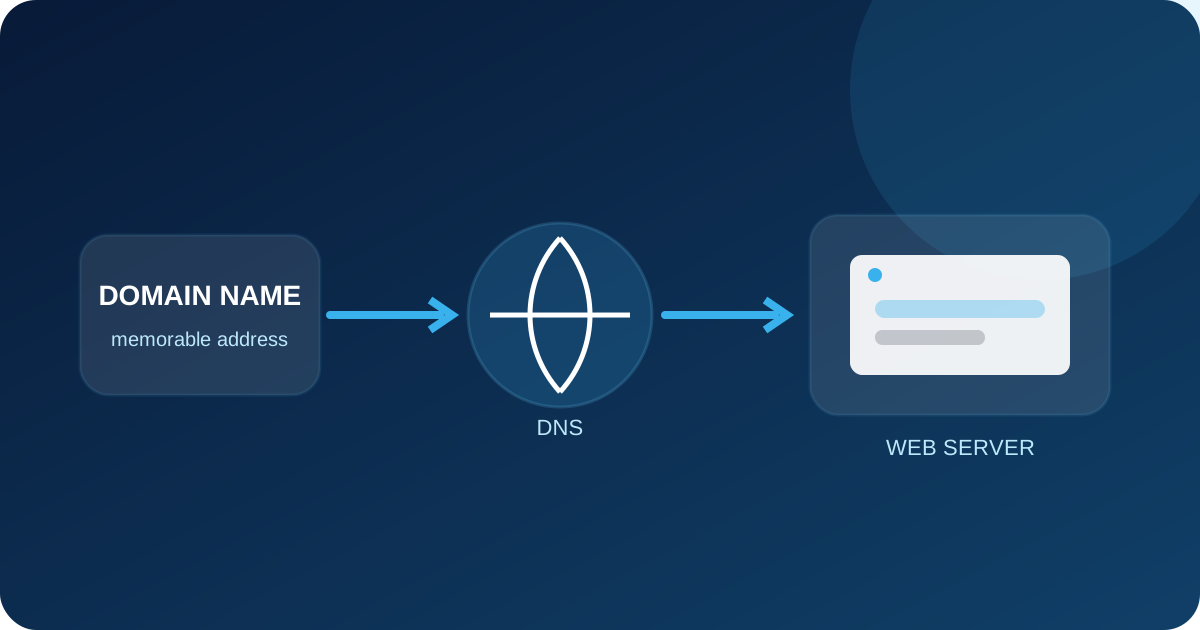
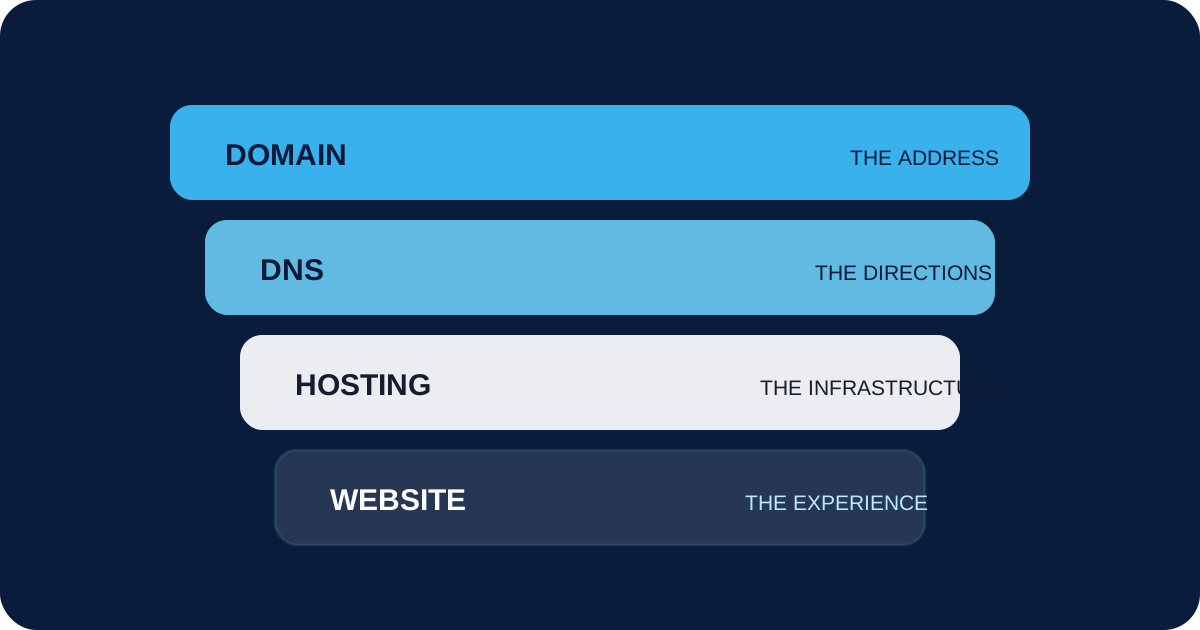
These four terms are often sold together, but they solve different problems. Separating them makes migrations safer, troubleshooting faster and vendor decisions clearer.
Four connected layers
The domain is the registered name. DNS publishes directions. Hosting provides compute, storage and network service. The website is the code, content and data delivered by that infrastructure.
| Layer | Purpose | Typical failure |
|---|---|---|
| Domain | Right to use the name | Expired or locked registration |
| DNS | Publish service destinations | Wrong or missing record |
| Hosting | Run and store services | Server unavailable |
| Website | Present content and functions | Application error |
They can use different providers
Your registrar, DNS platform and hosting provider do not need to be the same company. Separation can improve flexibility, but only when ownership and access are documented. Consolidation can simplify support, but it should not hide control of the registration.
- Know where each layer is managed.
- Use role-based access and MFA.
- Keep an export or record of critical DNS entries.
Troubleshoot from the outside in
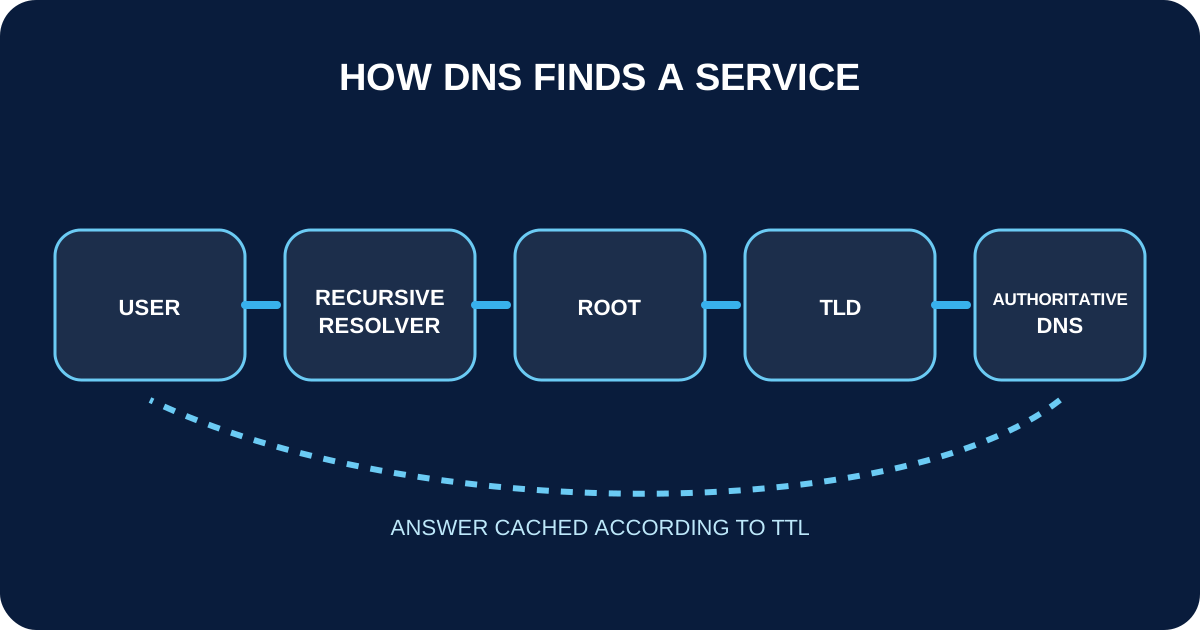
First confirm the registration is active and the delegation nameservers are correct. Then inspect authoritative DNS, test the destination network and finally check the application. This order prevents an application team from debugging code when traffic never reaches the server.
- Check registration and domain status.
- Check delegation and authoritative records.
- Test the host and TLS certificate.
- Inspect application logs and content.
Frequently asked questions
Can I move hosting without transferring the domain?
Yes. Update the required DNS records while keeping the registration at the current registrar.
Does changing nameservers move my website files?
No. It changes where DNS answers are published; files and databases must be migrated separately.
Is an SSL certificate part of DNS?
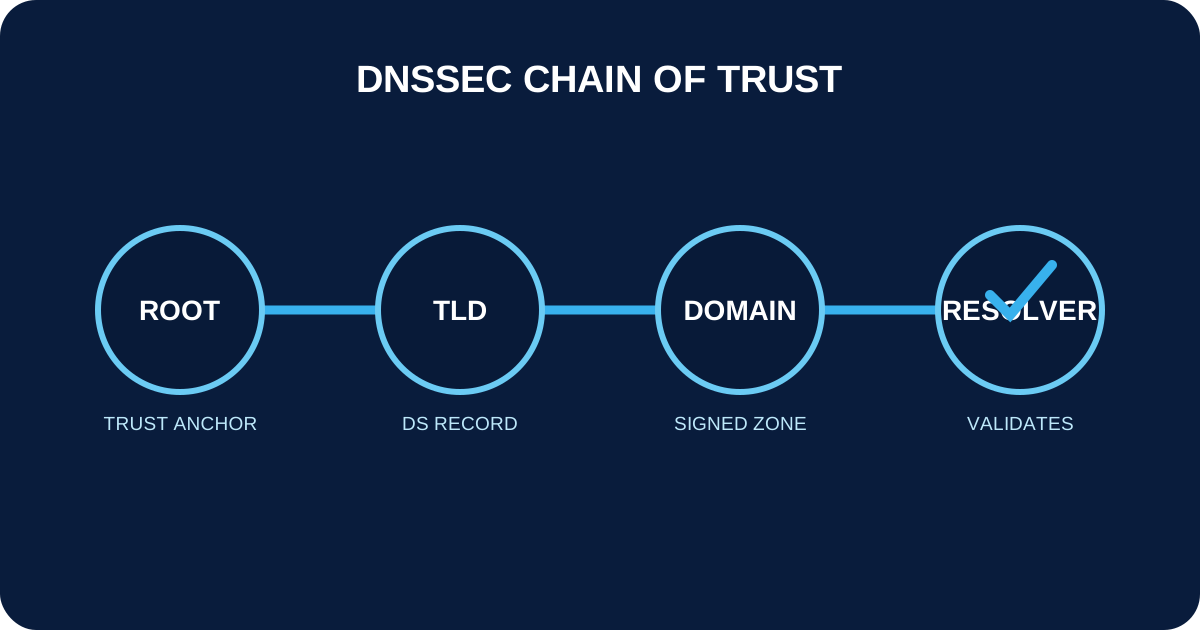
No. DNS helps users find the server, while TLS certificates authenticate and encrypt the connection. DNS may be used for certificate validation.