The extension is part of the name customers see and repeat. .com, .net and .org are technically capable of hosting the same web and email services, but their history creates different expectations that can influence trust and recall.
What each extension commonly signals
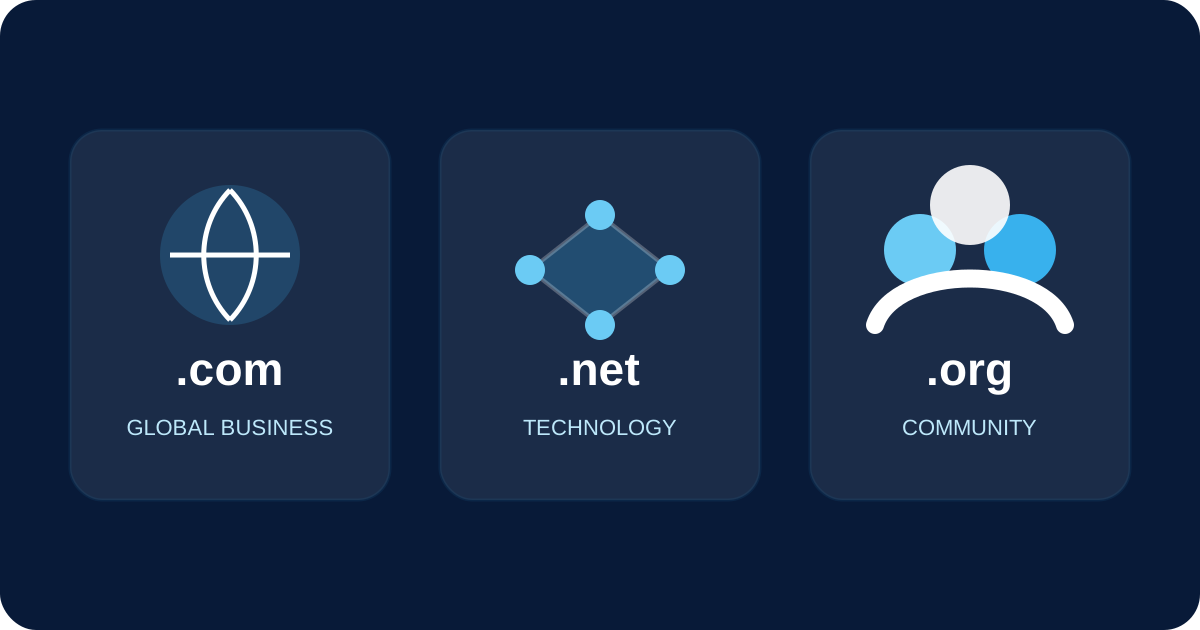
.com is broadly associated with commercial and general-purpose websites. .net has a network and technology heritage, while .org is widely used by organizations, communities and nonprofits. These are conventions, not guarantees about who operates a site.
| Extension | Common expectation | Good fit |
|---|---|---|
| .com | Global, commercial, general | Businesses and broad consumer brands |
| .net | Network or technology | Infrastructure and technical products |
| .org | Organization or community | Associations, causes and institutions |
Choose for people before infrastructure
Search engines and browsers can reach all three the same way. Focus on whether customers will remember the complete name, whether the extension supports the brand promise and whether email recipients will trust it.
- Test the full name in conversation.
- Check confusion with the same label on another extension.
- Review legal and impersonation risk.
Frequently asked questions
Does .com rank better than .net or .org?
The extension alone does not guarantee rankings. Helpful content, technical accessibility, reputation and many other signals matter.
Can a business use .org?
Technical availability may permit it, but the audience may expect an organization or public-interest purpose. Avoid a misleading identity.
Should I register all three?
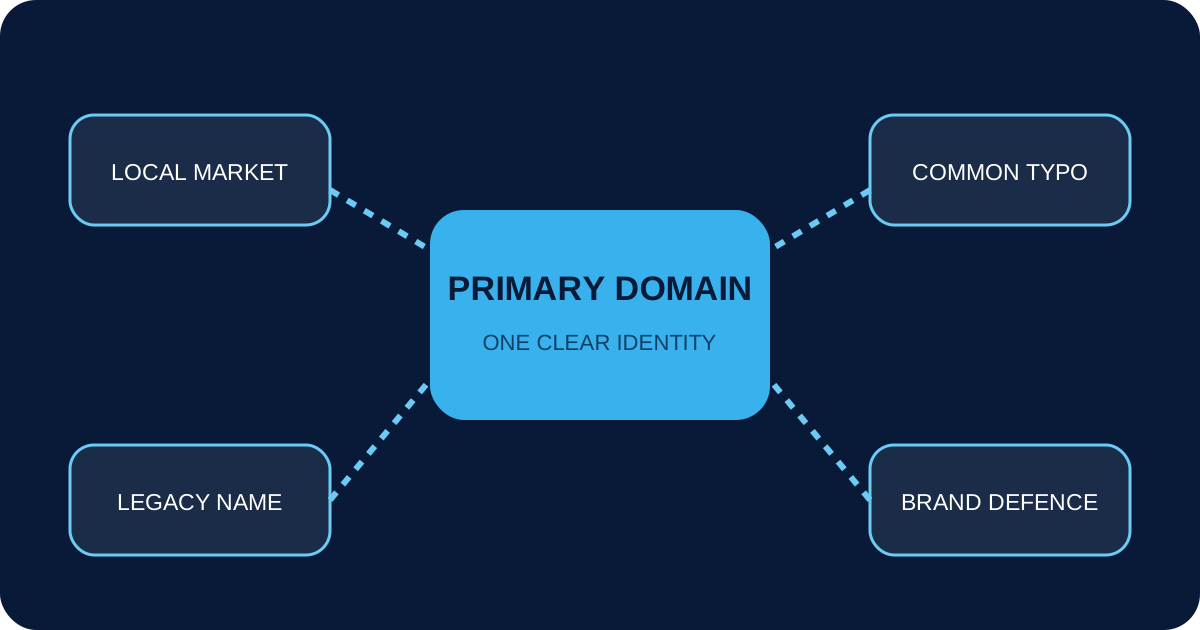
Register defensively when the cost and risk justify it, but operate one clear primary domain and redirect the others.