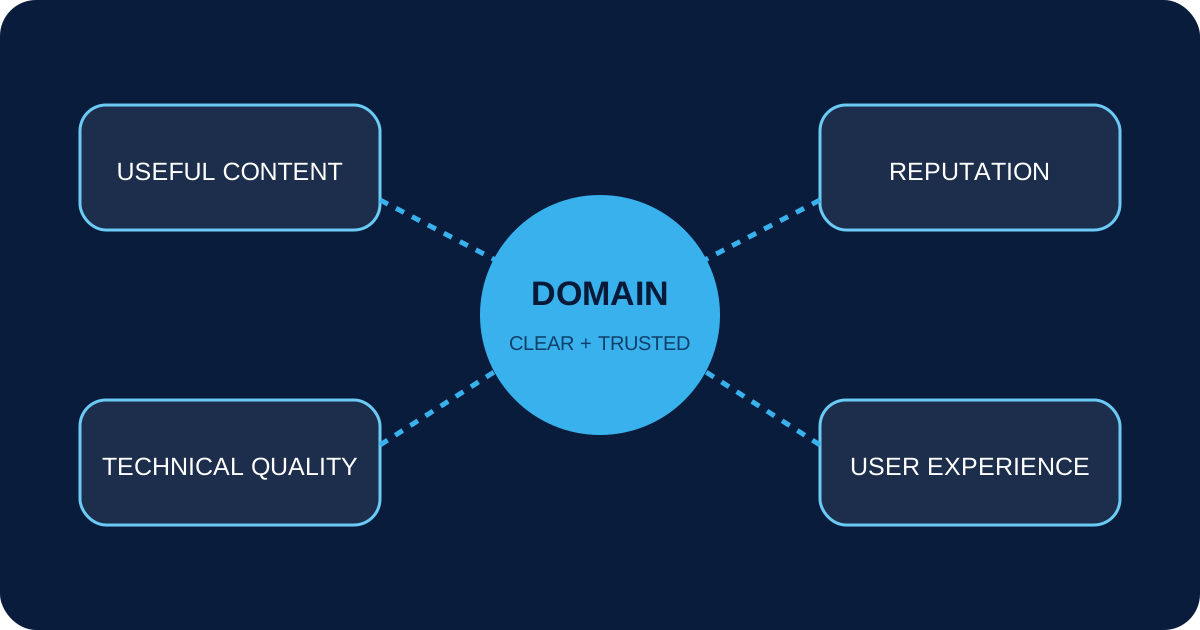
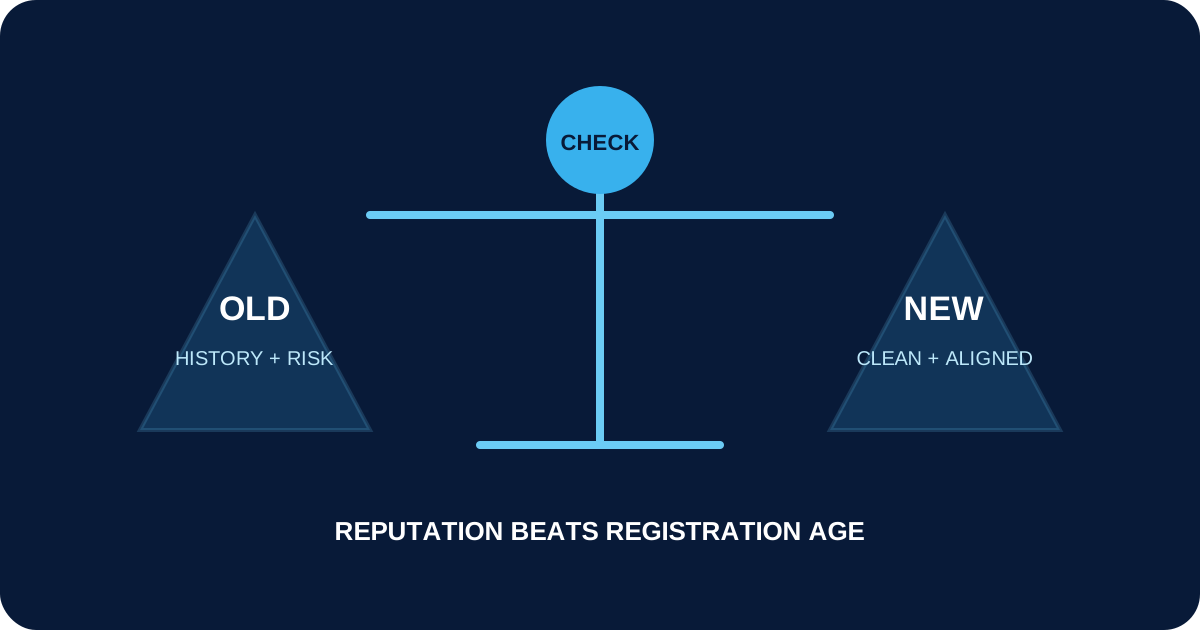
An older registration is not automatically better than a new one. What matters is the site's real history: useful content, valid references, clean ownership and whether previous use creates trust or cleanup work.
Age is not the same as history
A domain may have been registered for years without hosting a useful site. Another may carry strong references and audience recognition. Evaluate verifiable history rather than the registration date alone.
- Inspect indexed pages and archived use.
- Review link relevance, not only link count.
- Check for brand, spam or security associations.
Due diligence for an existing domain
Verify the seller's control, transfer eligibility and complete history. Search the exact name, inspect backlinks and review whether prior content conflicts with the new purpose. Legal review may be appropriate for valuable acquisitions.
- Use a controlled transaction process.
- Do not inherit unknown email or DNS records.
- Rebuild security settings after transfer.
When a new domain is the better foundation
A new name provides a clean operational start and exact brand alignment. It must earn discovery and references, but it avoids paying for age that has no useful reputation.
- Publish a coherent launch cluster.
- Set canonical, sitemap and analytics from day one.
- Measure branded discovery separately from non-brand search.
Frequently asked questions
Does domain age directly improve ranking?
Do not assume registration age is a shortcut. Evaluate the site's content, links, reputation and technical condition.
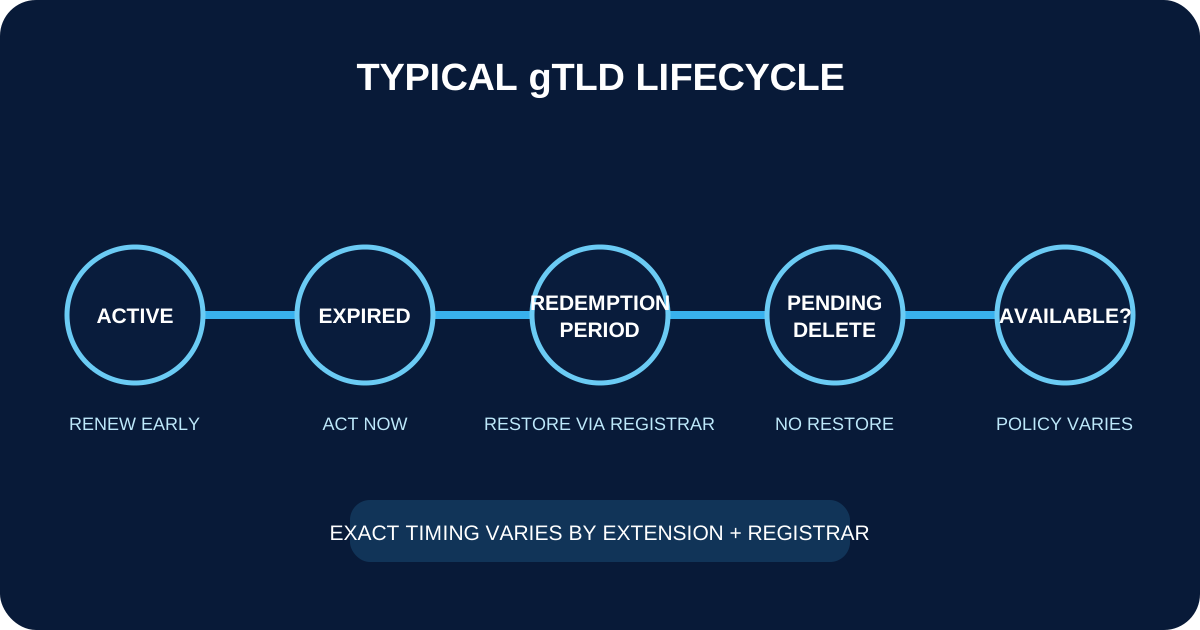
Can an expired domain carry penalties?
Previous spam or abuse can create risk. Investigate history carefully and do not buy solely from automated authority scores.
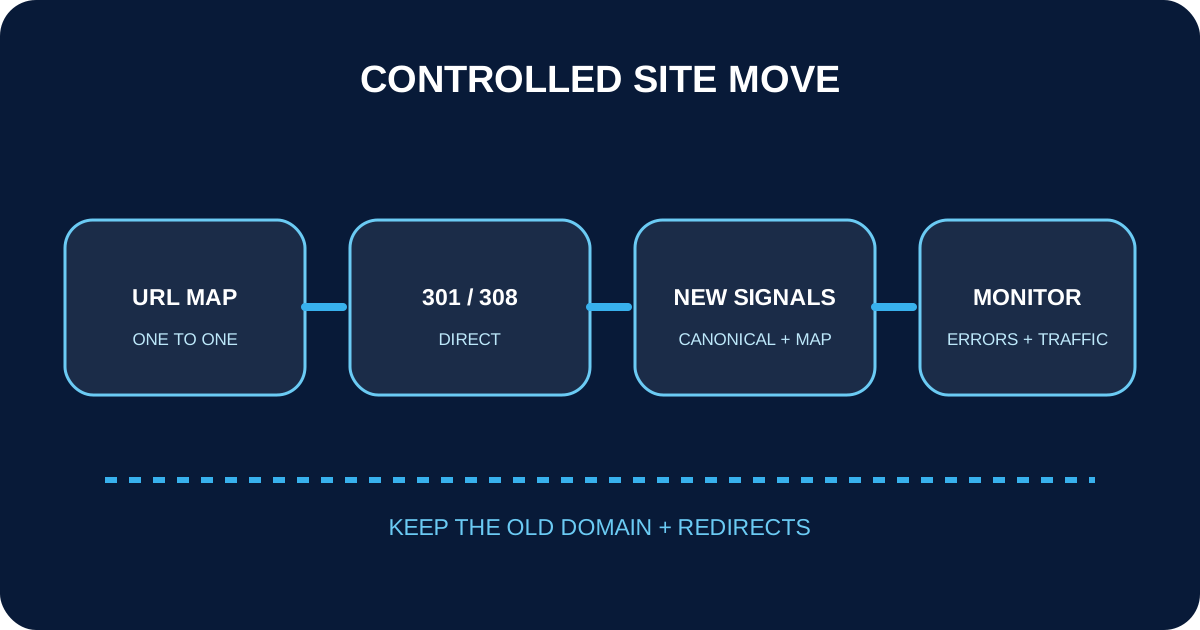
Should I redirect an acquired domain?
Only when its previous topic and audience are genuinely relevant. Irrelevant redirects can confuse users and search systems.